Buy izdirectory.com ?
We are moving the project
izdirectory.com .
Are you interested in purchasing the domain
izdirectory.com ?
domain@kv-gmbh.de · 0541-91531010
Buy izdirectory.com ?
Can only liquids that can form hydrogen bonds form hydrogen bonds?
No, only liquids that contain hydrogen atoms bonded to highly electronegative atoms such as oxygen, nitrogen, or fluorine can form hydrogen bonds. These highly electronegative atoms create a partial negative charge, which allows them to attract the partially positive hydrogen atoms of neighboring molecules. Therefore, only liquids that contain these specific types of bonds can form hydrogen bonds. **
What are hydrogen bonds?
Hydrogen bonds are weak electrostatic attractions between a hydrogen atom covalently bonded to an electronegative atom (such as oxygen, nitrogen, or fluorine) and another electronegative atom. These bonds are important in biological systems, such as in the structure of DNA and proteins, as well as in the properties of water. Hydrogen bonds are stronger than van der Waals forces but weaker than covalent or ionic bonds. **


Similar search terms for Hydrogen bonds Strong
Top-Angebote
Products related to Hydrogen bonds Strong:
-
S&S Northern Merlin Gas Detector X-Range - HydrogenThe Merlin Gas Detector X-Range for Hydrogen is designed to integrate seamlessly with the S&S; Merlin range of Gas Detection Panels and Safety Systems. Featuring a compact, modern, and digital design, this detector is both aesthetically pleasing and easy to install, making it ideal for industrial and commercial indoor applications. Advanced Detection: Effectively detects hydrogen gas, ensuring safety in various environments. Dual-Level Alarms: Features both low and high-level alarms for comprehensive safety monitoring. Visual Indicators: Traffic light-style gas level display provides clear and immediate visual feedback on gas levels. Easy Installation: Designed for straightforward setup, ensuring hassle-free integration.217,50 £*Shipping: 0,00 £Secure redirect to the provider
-
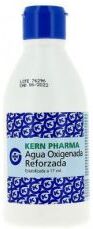
WELLA Professionals Welloxon Perfect Hydrogen Peroxide 9% 30 Vol 60 mlHealth and Beauty Coloration WELLA Professionals Welloxon Perfect Hydrogen Peroxide 9% 30 Vol 60 ml What is WELLA Professionals Welloxon Perfect Hydrogen Peroxide 9% 30 Vol. WELLA Professionals Welloxon Perfect Hydrogen Peroxide 9% 30 Vol. is a high-quality hydrogen peroxide specially formulated for use in hair coloring and bleaching treatments. This product is part of the Wella Professionals professional line, recognized worldwide for its innovation and effectiveness in hair care. Its 9% concentration (30 volumes) makes it ideal for deeper bleaching or for obtaining more intense and long-lasting hair tones. Benefits - Effective bleaching : Thanks to its advanced formula, WELLA Professionals Welloxon Perfect Hydrogen Peroxide 9% guarantees optimal and controlled bleaching, ensuring high quality results without damaging the hair structure. - Increases color intensity : This oxygenator provides perfect activation for any type of dye or bleach in the Wella line, ensuring that the color is vibrant and long-lasting. - Professional results : Ideal for use in beauty salons, but also suitable for use at home, provided the recommended safety and application instructions are followed. - Stable formula : The mixture with Welloxon Perfect 9% guarantees a stable and smooth emulsion, preventing the product from drying out or losing effectiveness quickly. Who is it for? WELLA Professionals Welloxon Perfect Hydrogen Peroxide 9% 30 Vol. is aimed at both hair professionals and users who want to achieve perfect color at home. It is ideal for: - Hairdressing professionals who need a reliable and effective product to obtain precise results for their clients. - Color and bleaching lovers who want to perform a bleaching treatment at home and need a quality product to obtain professional results. - People who are looking for a radical change in their hair color , either to lighten the natural tone or to perform highlights, balayage or total bleaching techniques. How do I apply it? WELLA Professionals Welloxon Perfect Hydrogen Peroxide 9% 30 Vol. must be applied according to the instructions for use to ensure safe and effective results: - Mixing preparation : Mix Welloxon Perfect 9% with the Wella colour or bleach of your choice in an appropriate ratio (usually 1:1 or according to the specific product instructions). Make sure to use a non-metallic bowl and a suitable brush for application. - Application : Apply the mixture evenly to dry or slightly damp hair, starting at the roots and spreading towards the ends, depending on the type of result you want to achieve. - Exposure time : Allow the product to act for the recommended time depending on the type of bleaching or coloring you are performing. This time varies between 20 and 40 minutes, depending on the color and the desired effect. - Rinse : Once the exposure time has elapsed, rinse your hair with plenty of warm water and wash with a mild shampoo. Product Usage WELLA Professionals Welloxon Perfect Hydrogen Peroxide...2,31 £*Shipping: 3,99 £Secure redirect to the provider
-
Abril Et Nature Nature Oxydant Special Blonde Hydrogen peroxide 120 mlHealth and Beauty Coloration Abril Et Nature Nature Oxydant Special Blonde Hydrogen peroxide 120 ml Nature Oxidant Special Blonde combines excellent hair lightening efficacy, with a hair protection and treatment action during technical work. Enriched with natural plant extracts and oils: plant stem cell culture filtrate, hyaluronic acid, argan oil, virgin olive oil and shea butter. Properties: Emulsion of moisturizing oils and hydrogen peroxide, especially for bleaching, blondes, highlights and to give color intensity to all the tones of the April et nature Treatment Hair Color dye. Special to use mixed with Platinum Bleaching Cream discolorations and Maxiblanc compact powder discoloration.2,17 £*Shipping: 3,99 £Secure redirect to the provider


-
Can ethanal form hydrogen bonds?
Yes, ethanal (acetaldehyde) can form hydrogen bonds. Ethanal contains a carbonyl group (C=O), which has a partially positive carbon atom and a partially negative oxygen atom. This allows ethanal to form hydrogen bonds with molecules containing hydrogen atoms bonded to electronegative atoms such as oxygen or nitrogen. **
-
Can aldehydes form hydrogen bonds?
Yes, aldehydes can form hydrogen bonds. The oxygen atom in the carbonyl group of an aldehyde can act as a hydrogen bond acceptor, and the hydrogen atom attached to the carbonyl carbon can act as a hydrogen bond donor. This allows aldehydes to participate in hydrogen bonding with other molecules that contain hydrogen bond donors or acceptors. **
-
How are hydrogen bonds formed?
Hydrogen bonds are formed when a hydrogen atom that is covalently bonded to an electronegative atom (such as oxygen, nitrogen, or fluorine) is attracted to another electronegative atom nearby. This attraction creates a weak electrostatic bond between the hydrogen atom and the electronegative atom, resulting in a hydrogen bond. These bonds are important in many biological processes, such as the structure of DNA and the folding of proteins, as well as in the properties of water. **
-
Why are Van der Waals bonds weaker than hydrogen bonds?
Van der Waals bonds are weaker than hydrogen bonds because they are formed due to temporary fluctuations in electron distribution around atoms or molecules, resulting in weak attractive forces. In contrast, hydrogen bonds are formed between a hydrogen atom and a highly electronegative atom such as oxygen, nitrogen, or fluorine, resulting in a stronger electrostatic attraction. Additionally, hydrogen bonds are directional and can form multiple bonds between molecules, while Van der Waals bonds are non-directional and typically only occur between non-polar or weakly polar molecules. **

What are hydrogen bonds in chemistry?
Hydrogen bonds are a type of weak chemical bond that occurs between a hydrogen atom and a highly electronegative atom, such as oxygen, nitrogen, or fluorine. These bonds are important in various biological processes, such as the structure of DNA and the folding of proteins. Hydrogen bonds are stronger than van der Waals forces but weaker than covalent or ionic bonds. **
Which molecules cannot form hydrogen bonds?
Molecules that cannot form hydrogen bonds are those that do not have hydrogen atoms bonded to highly electronegative atoms such as oxygen, nitrogen, or fluorine. For example, hydrocarbons like methane (CH4) and nonpolar molecules like carbon dioxide (CO2) cannot form hydrogen bonds because they lack hydrogen atoms bonded to electronegative atoms. Additionally, molecules that have hydrogen atoms bonded to less electronegative atoms like carbon or sulfur also cannot form hydrogen bonds. **
Top-Angebote
Products related to Hydrogen bonds Strong:
-
Gen Professional Hydrogen 90 CapsulesNutrition and Supplements Vitamins and minerals Gen Professional Hydrogen 90 Capsules Food Supplement based on Vitamins, Minerals, and coenzyme Q10. Suitable for amateur and professional athletes, especially endurance athletes, vegans, vegetarians, and athletic women during their period. Instructions for use: Take 1 capsule a day.14,59 £*Shipping: 3,99 £Secure redirect to the provider
-
Matrix Instacure Build-A-Bond Mighty Bonds Shampoo 300ml DoubleStock up and save on professional results at home with this double Matrix Instacure Build-A-Bond Mighty Bonds Shampoo! (Includes 2 x 300ml Shampoo) Healthy hair starts from within, and this Matrix Instacure Build-A-Bond Mighty Bonds Shampoo gets straight to work This luxuriously textured shampoo forms a rich lather and gets to work immediately on mega damaged hair. Key ingredients include Citric acid, which penetrates deep into the hair fiber to strengthen and repair your hair from within. It's also infused with Squalane, which works on the hair's surface to soften and smooth every strand! Ingredients: AQUA / WATER / EAU, DECYL GLUCOSIDE, SODIUM COCOYL ISETHIONATE, COCAMIDOPROPYL BETAINE, CITRIC ACID, SODIUM HYDROXIDE, PANTHENOL, PARFUM / FRAGRANCE, GLYCERIN, DIMETHICONE, PEG-150 DISTEARATE, PPG-5-CETETH-20, SODIUM BENZOATE, SODIUM CHLORIDE, PEG-55 PROPYLENE GLYCOL OLEATE, PROPYLENE GLYCOL, CARBOMER, LIMONENE, COCO-CAPRYLATE/CAPRATE, POLYQUATERNIUM-67, SALICYLIC ACID, AMODIMETHICONE, SODIUM PHYTATE, GLYCOL DISTEARATE, SQUALANE, COCO-BETAINE, LINALOOL, ACRYLATES/BEHENETH-25 METHACRYLATE COPOLYMER, CITRONELLOL, TRIDECETH-6, BENZYL ALCOHOL, ALCOHOL, CETRIMONIUM CHLORIDE, CI 17200 / RED 3324,16 £*Shipping: 0,00 £Secure redirect to the provider
-
S&S Northern Merlin Gas Detector X-Range - HydrogenThe Merlin Gas Detector X-Range for Hydrogen is designed to integrate seamlessly with the S&S; Merlin range of Gas Detection Panels and Safety Systems. Featuring a compact, modern, and digital design, this detector is both aesthetically pleasing and easy to install, making it ideal for industrial and commercial indoor applications. Advanced Detection: Effectively detects hydrogen gas, ensuring safety in various environments. Dual-Level Alarms: Features both low and high-level alarms for comprehensive safety monitoring. Visual Indicators: Traffic light-style gas level display provides clear and immediate visual feedback on gas levels. Easy Installation: Designed for straightforward setup, ensuring hassle-free integration.217,50 £*Shipping: 0,00 £Secure redirect to the provider
-
Can only liquids that can form hydrogen bonds form hydrogen bonds?
No, only liquids that contain hydrogen atoms bonded to highly electronegative atoms such as oxygen, nitrogen, or fluorine can form hydrogen bonds. These highly electronegative atoms create a partial negative charge, which allows them to attract the partially positive hydrogen atoms of neighboring molecules. Therefore, only liquids that contain these specific types of bonds can form hydrogen bonds. **
-
What are hydrogen bonds?
Hydrogen bonds are weak electrostatic attractions between a hydrogen atom covalently bonded to an electronegative atom (such as oxygen, nitrogen, or fluorine) and another electronegative atom. These bonds are important in biological systems, such as in the structure of DNA and proteins, as well as in the properties of water. Hydrogen bonds are stronger than van der Waals forces but weaker than covalent or ionic bonds. **
-
Can ethanal form hydrogen bonds?
Yes, ethanal (acetaldehyde) can form hydrogen bonds. Ethanal contains a carbonyl group (C=O), which has a partially positive carbon atom and a partially negative oxygen atom. This allows ethanal to form hydrogen bonds with molecules containing hydrogen atoms bonded to electronegative atoms such as oxygen or nitrogen. **
-
Can aldehydes form hydrogen bonds?
Yes, aldehydes can form hydrogen bonds. The oxygen atom in the carbonyl group of an aldehyde can act as a hydrogen bond acceptor, and the hydrogen atom attached to the carbonyl carbon can act as a hydrogen bond donor. This allows aldehydes to participate in hydrogen bonding with other molecules that contain hydrogen bond donors or acceptors. **
Similar search terms for Hydrogen bonds Strong
-
WELLA Professionals Welloxon Perfect Hydrogen Peroxide 9% 30 Vol 60 mlHealth and Beauty Coloration WELLA Professionals Welloxon Perfect Hydrogen Peroxide 9% 30 Vol 60 ml What is WELLA Professionals Welloxon Perfect Hydrogen Peroxide 9% 30 Vol. WELLA Professionals Welloxon Perfect Hydrogen Peroxide 9% 30 Vol. is a high-quality hydrogen peroxide specially formulated for use in hair coloring and bleaching treatments. This product is part of the Wella Professionals professional line, recognized worldwide for its innovation and effectiveness in hair care. Its 9% concentration (30 volumes) makes it ideal for deeper bleaching or for obtaining more intense and long-lasting hair tones. Benefits - Effective bleaching : Thanks to its advanced formula, WELLA Professionals Welloxon Perfect Hydrogen Peroxide 9% guarantees optimal and controlled bleaching, ensuring high quality results without damaging the hair structure. - Increases color intensity : This oxygenator provides perfect activation for any type of dye or bleach in the Wella line, ensuring that the color is vibrant and long-lasting. - Professional results : Ideal for use in beauty salons, but also suitable for use at home, provided the recommended safety and application instructions are followed. - Stable formula : The mixture with Welloxon Perfect 9% guarantees a stable and smooth emulsion, preventing the product from drying out or losing effectiveness quickly. Who is it for? WELLA Professionals Welloxon Perfect Hydrogen Peroxide 9% 30 Vol. is aimed at both hair professionals and users who want to achieve perfect color at home. It is ideal for: - Hairdressing professionals who need a reliable and effective product to obtain precise results for their clients. - Color and bleaching lovers who want to perform a bleaching treatment at home and need a quality product to obtain professional results. - People who are looking for a radical change in their hair color , either to lighten the natural tone or to perform highlights, balayage or total bleaching techniques. How do I apply it? WELLA Professionals Welloxon Perfect Hydrogen Peroxide 9% 30 Vol. must be applied according to the instructions for use to ensure safe and effective results: - Mixing preparation : Mix Welloxon Perfect 9% with the Wella colour or bleach of your choice in an appropriate ratio (usually 1:1 or according to the specific product instructions). Make sure to use a non-metallic bowl and a suitable brush for application. - Application : Apply the mixture evenly to dry or slightly damp hair, starting at the roots and spreading towards the ends, depending on the type of result you want to achieve. - Exposure time : Allow the product to act for the recommended time depending on the type of bleaching or coloring you are performing. This time varies between 20 and 40 minutes, depending on the color and the desired effect. - Rinse : Once the exposure time has elapsed, rinse your hair with plenty of warm water and wash with a mild shampoo. Product Usage WELLA Professionals Welloxon Perfect Hydrogen Peroxide...2,31 £*Shipping: 3,99 £Secure redirect to the provider
-
Abril Et Nature Nature Oxydant Special Blonde Hydrogen peroxide 120 mlHealth and Beauty Coloration Abril Et Nature Nature Oxydant Special Blonde Hydrogen peroxide 120 ml Nature Oxidant Special Blonde combines excellent hair lightening efficacy, with a hair protection and treatment action during technical work. Enriched with natural plant extracts and oils: plant stem cell culture filtrate, hyaluronic acid, argan oil, virgin olive oil and shea butter. Properties: Emulsion of moisturizing oils and hydrogen peroxide, especially for bleaching, blondes, highlights and to give color intensity to all the tones of the April et nature Treatment Hair Color dye. Special to use mixed with Platinum Bleaching Cream discolorations and Maxiblanc compact powder discoloration.2,17 £*Shipping: 3,99 £Secure redirect to the provider
-
CAPCOM EUROSOFT LTD Monster Hunter Stories 3 Twist - Nintendo Switch 2 Game Cartridge - Unbreakable BondsEmbark on a new Riders' journey in Monster Hunter Stories 3 Twist for Nintendo Switch. Forge unbreakable bonds with Monsties, hatch mysterious eggs, and uncover a sweeping story filled with discovery and danger. This standalone adventure blends accessible, turn-based combat with deep team-building and exploration, making it suitable for both returning Riders and newcomers to the Monster Hunter universe. Recruit and raise a party of fan-favorite monsters, combine their abilities through layered skill trees, and unleash powerful Kinship Skills in strategic battles. Explore vibrant biomes, gather crafting materials, and customize weapons and armor to match your playstyle. With richly animated cutscenes, character-driven quests, and an expansive bestiary to collect, Monster Hunter Stories 3 Twist delivers a compelling RPG experience at home or on the go.66,53 £*Shipping: 0,00 £Secure redirect to the provider
-
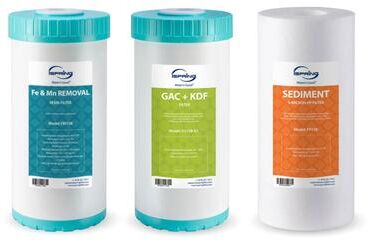
iSpring F3WGB31BMKS Whole House Water Filter Pack, Reduces Iron, Manganese, Hydrogen Sulfide, Lead, Chlorine, SedimentsReliable Whole House Water Filtration – F3WGB31BMKS whole house water filter replacement pack includes a 10” x 4.5” sediment filter, a GAC and KDF compound filter, and an iron filter to tackle sediments, chlorine, heavy metals, hydrogen sulfide,...143,77 $*Shipping: 0,00 $Secure redirect to the provider
-
How are hydrogen bonds formed?
Hydrogen bonds are formed when a hydrogen atom that is covalently bonded to an electronegative atom (such as oxygen, nitrogen, or fluorine) is attracted to another electronegative atom nearby. This attraction creates a weak electrostatic bond between the hydrogen atom and the electronegative atom, resulting in a hydrogen bond. These bonds are important in many biological processes, such as the structure of DNA and the folding of proteins, as well as in the properties of water. **
-
Why are Van der Waals bonds weaker than hydrogen bonds?
Van der Waals bonds are weaker than hydrogen bonds because they are formed due to temporary fluctuations in electron distribution around atoms or molecules, resulting in weak attractive forces. In contrast, hydrogen bonds are formed between a hydrogen atom and a highly electronegative atom such as oxygen, nitrogen, or fluorine, resulting in a stronger electrostatic attraction. Additionally, hydrogen bonds are directional and can form multiple bonds between molecules, while Van der Waals bonds are non-directional and typically only occur between non-polar or weakly polar molecules. **
-
What are hydrogen bonds in chemistry?
Hydrogen bonds are a type of weak chemical bond that occurs between a hydrogen atom and a highly electronegative atom, such as oxygen, nitrogen, or fluorine. These bonds are important in various biological processes, such as the structure of DNA and the folding of proteins. Hydrogen bonds are stronger than van der Waals forces but weaker than covalent or ionic bonds. **
-
Which molecules cannot form hydrogen bonds?
Molecules that cannot form hydrogen bonds are those that do not have hydrogen atoms bonded to highly electronegative atoms such as oxygen, nitrogen, or fluorine. For example, hydrocarbons like methane (CH4) and nonpolar molecules like carbon dioxide (CO2) cannot form hydrogen bonds because they lack hydrogen atoms bonded to electronegative atoms. Additionally, molecules that have hydrogen atoms bonded to less electronegative atoms like carbon or sulfur also cannot form hydrogen bonds. **
* All prices are inclusive of VAT and, if applicable, plus shipping costs. The offer information is based on the details provided by the respective shop and is updated through automated processes. Real-time updates do not occur, so deviations can occur in individual cases. ** Note: Parts of this content were created by AI.